
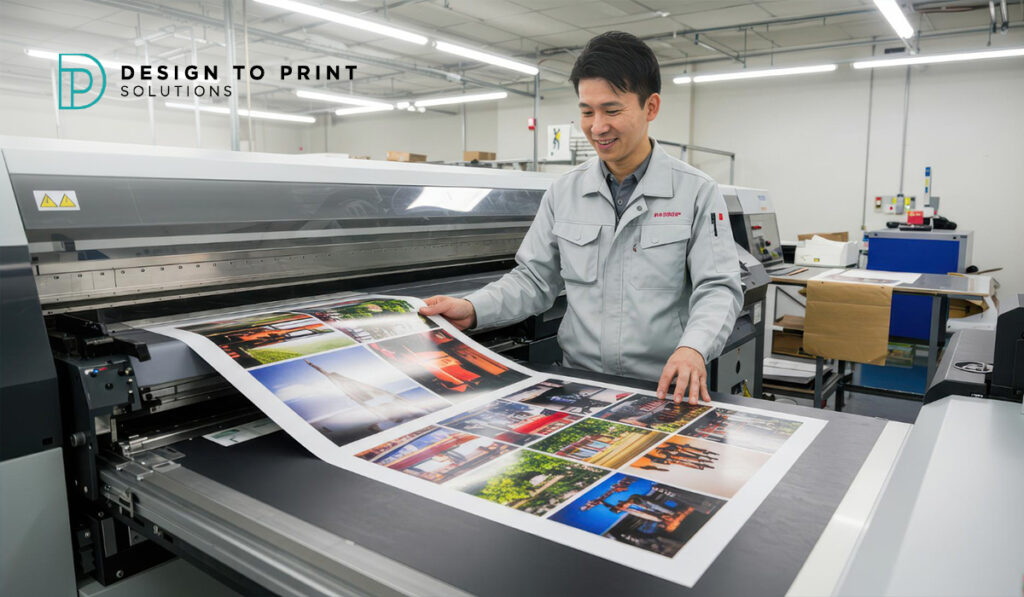
Inkjet printing is one of the most flexible ways to produce sharp, full-colour prints in Melbourne especially when you need fast turnaround, short runs, variable data (personalised) output, or large-format work. The quality you get comes down to the press type (production inkjet vs fine art pigment), the paper or substrate, colour management, and finishing. Costs are driven by size, coverage (how much ink is laid down), stock, and the time spent on proofing and finishing.
What “inkjet printing” means in 2026
Inkjet isn’t one machine it’s a family of technologies:
- Production inkjet (high-speed): Built for volume and efficiency. Competitors in Melbourne highlight inkjet for addressing, barcodes, and fast throughput—think envelopes, postcards, magazines, and other mail-ready items.
- Pigment inkjet / giclée (fine art): Tuned for archival quality, smooth gradients, deep blacks, and precise control—common for photography, exhibitions, and art reproductions.
- Large-format inkjet: Ideal for posters, banners, plans, event signage, pull-up banners, and display graphics. Even universities price large-format inkjet by the centimetre length used on wide rolls, which shows how strongly “size” influences cost.
For customers comparing digital printing options, inkjet often wins when you want crisp detail, quick revisions, and a wide range of materials without the setup overhead of traditional plates.
Where inkjet shines for Melbourne businesses
If you’re searching for printing services or a printing service Melbourne teams can rely on, these are the jobs where inkjet is usually the best fit:
1) Marketing collateral that needs to look premium
- Flyers, postcards, promos, short-run brochures
- Event handouts and last-minute updates
- Point-of-sale graphics and quick seasonal campaigns
Inkjet handles frequent artwork changes smoothly, so you’re not locked into huge quantities to make a job “worth it”.
2) Personalised or variable-data print (VDP)
Production inkjet is widely promoted for mail items like envelopes, postcards, and magazines because it can apply clean text, addresses, and barcodes at speed.
That’s a big deal for:
- Member mail-outs
- Invitations with unique names/QR codes
- Loyalty offers with personalised messaging
3) Large-format visuals
Large-format inkjet is the practical choice for:
- Posters and window graphics
- Pull-up banners and event signage
- Construction plans and presentation boards
One large-format supplier example shows “pay by length used” pricing meaning every extra centimetre impacts the final bill.
4) Creative and fine art output
Fine art printers lean heavily into pigment inkjet for colour depth, tonal detail, and archival materials, often listing preferred file formats and colour spaces for best results.
If you’re producing gallery pieces, photography prints, or art reproductions, it’s worth using a provider who understands papers, profiling, and finishing.
Quality factors that actually change the result
When people say “we need high quality”, these are the levers that move the needle:
- Paper/substrate choice: Coated stocks pop for marketing; uncoated stocks feel tactile; specialty papers suit art and photo work. Fine art providers often specify premium paper brands and types because the paper is half the outcome.
- Resolution and file prep: Print sharpness depends on how the artwork is built. Many fine art labs recommend preparing files around 180–300 ppi at final size and using a suitable colour space.
- Colour management: Calibrated equipment and sensible proofing reduce surprises (especially with brand colours).
- Finishing: Trimming, folding, laminating, mounting, eyelets, and binding can lift a print job from “fine” to “client-ready”.
DTPS positions itself as a hands-on team that covers design and print, with quick turnaround and no minimum order—useful when you’re iterating or ordering in smaller batches.
What inkjet printing costs in Melbourne
Inkjet pricing varies widely because the job variables vary. But most quotes are influenced by the same set of cost drivers:
The big cost drivers
- Final size and quantity
Bigger prints use more material, more ink, and more finishing time. - Ink coverage
A full-bleed photo costs more than light text on a white background—because the machine is laying down far more ink. - Stock and speciality materials
Premium papers, synthetics, textured stocks, and archival materials push cost up. - Proofing and prepress time
If artwork needs repair, colour corrections, or multiple proofs, you’re paying for skilled time. - Finishing and delivery
Mounting, laminating, trimming, binding, and courier are often where jobs jump.
Real-world pricing signals from the market
- Fine art inkjet providers in Melbourne openly list starting prices (e.g., small prints from around the teens of dollars, scaling up by size).
- Large-format services can be priced by length used on wide rolls so scaling is linear with height.
How to keep your print quote sensible
- Send print-ready PDFs.
- Use the right size from the start
- Ask about stock alternatives.
- Batch variations .
- Choose finishing deliberately.
Common use cases DTPS can cover with digital and inkjet printing
If you’re comparing local printing services in Melbourne, DTPS promotes a broad set of outputs from business cards and brochures to large format prints supported by design capability and a personalised approach.
Typical business use cases include:
- Brand stationery (business cards, letterheads)
- Sales collateral (brochures, flyers, booklets)
- Labels, stickers, and packaging components
- Posters, banners, and signage
- Short-run updates when content changes often
That mix matters because many teams don’t want to manage five suppliers for one campaign.
Choosing the right printing service in Melbourne
When you’re picking a printing service Melbourne businesses can stick with, focus on decision points that actually affect your outcome:
- Do they ask the right questions? Usage, environment (indoor/outdoor), viewing distance, deadline, finishing.
- Can they show comparable work? A portfolio of similar jobs saves guesswork. (DTPS publishes recent work examples.)
- Can they handle fast turnarounds without cutting corners? DTPS emphasises quick turnaround as part of its service.
- Are they set up for both design and print? Useful when you need artwork fixes, layout help, or brand consistency.
Quick file checklist before you hit “send”
- PDF preferred (unless the printer requests something else)
- Correct final size + bleed (commonly 3mm for marketing pieces)
- Images at suitable resolution for final size
- Fonts embedded or outlined
- Brand colours supplied (Pantone/CMYK guidance if relevant)
- Notes on finishing (trim, fold, laminate, mount)
Wrap-up:
Inkjet is a strong choice for Melbourne businesses that need flexibility: short runs, quick edits, personalisation, and large-format graphics without sacrificing clarity. If you want consistent results, the winning combination is simple: correct files, the right stock, sensible proofing, and finishing that matches how the piece will be used.
FAQ:
1. How much does inkjet printing cost in Melbourne?
Inkjet printing costs in Melbourne depend on size, quantity, material, and ink coverage.
- Small marketing prints are usually priced per unit.
- Large-format prints are commonly priced per square metre or roll length.
- Premium papers, heavy ink coverage, and finishing (lamination, mounting, trimming) increase cost.
Short runs are cost-effective because there are no plate setup fees like offset printing.
2. What is the difference between inkjet and digital printing?
Inkjet printing is a type of digital printing.
Digital printing refers to any method that prints directly from a digital file without plates. Inkjet specifically uses microscopic droplets of ink sprayed onto the material.
Inkjet is ideal for:
- Short runs
- Personalised printing
- Large-format posters and banners
- High-detail photographic prints
Offset printing is generally better suited to very large-volume runs.
3. Is inkjet printing good quality for business marketing materials?
Yes. Modern inkjet printing delivers sharp text, smooth colour gradients, and strong image detail.
Quality depends on:
- File setup
- Paper or stock selection
- Colour management
- Finishing
For brochures, flyers, posters, and presentation materials, inkjet printing in Melbourne provides professional results with fast turnaround.
4. How long does digital printing take in Melbourne?
Turnaround times vary depending on job size and finishing requirements.
- Simple short-run prints can often be completed within a few business days.
- Large-format signage or complex finishing may take longer.
Digital and inkjet printing are generally much faster than offset printing because there’s no plate setup stage.
5. What types of products can be printed using inkjet printing?
Inkjet printing is highly versatile and commonly used for:
- Flyers and brochures
- Business cards
- Posters and large-format signage
- Pull-up banners
- Labels and stickers
- Personalised direct mail
- Fine art and photo prints
It’s widely used by Melbourne businesses that need flexibility, small batch printing, or customised materials.
