
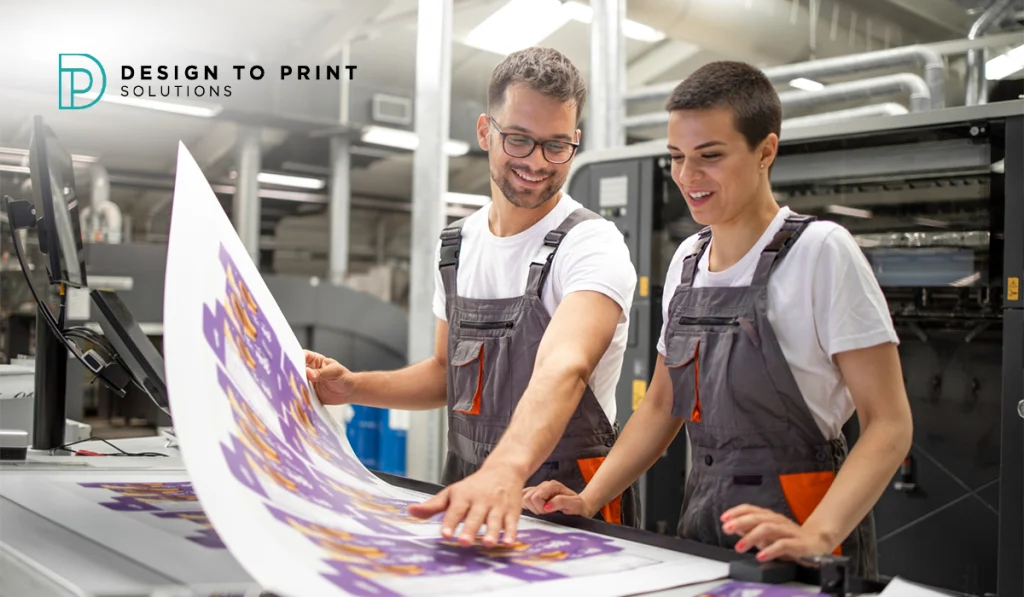
Printing technology has shaped the way people communicate and create for centuries, from early woodblock printing in ancient China to Gutenberg’s groundbreaking printing press in fifteenth-century Europe. These innovations made it possible to reproduce text accurately and at scale, helping ideas spread across the world. Today, printing continues to evolve, with different methods designed to suit specific materials, budgets, colour requirements, and production volumes. The eight main types of printing methods are inkjet printing, laser printing, LED UV printing, sublimation printing, screen printing, offset lithography, flexographic printing, and 3D printing, each offering distinct advantages for applications such as marketing materials, packaging, textiles, publications, and custom-made products.
Why Printing Still Matters
In the digital age it may seem like everything happens on screens, yet print remains an effective way to cut through the noise. Print advertising was valued at nearly US$49 billion in 2023, and research cited by VistaPrint shows that 80 % of consumers act on printed ads compared with 45 % for digital ones. Physical media is also easier to remember; most 18‑ to 23‑year‑olds say they find print easier to read than digital content. These numbers show that a well‑designed flyer or poster can make a lasting impression in a way that a social post may not.
Approaches to Printing
There are two broad approaches to printing. Traditional or analogue processes use a plate to transfer ink to a surface—think of a metal plate coated in ink and pressed onto paper. Digital printing, by contrast, sends digital files directly to the printer without a plate. The method you choose influences speed, cost, print quality and available materials. Below you’ll find an overview of eight popular methods of printing and their best use cases.
1. Inkjet Printing
Inkjet printing is the most familiar printing method for home and small‑office use. An inkjet printer sprays microscopic droplets of ink onto paper, producing sharp images and smooth colour gradients.
Advantages: this method excels at reproducing vibrant colours and is ideal for photographs. Inkjet printers are also affordable to purchase.
Disadvantages: replacement cartridges are costly and the printing speed is relatively slow.
Best for: high‑quality photo prints, coloured documents and small‑batch projects.
Which printing method is best for photos?
For photos you need accurate colour and smooth gradients, which makes inkjet printing the best choice. Inkjet printers spray tiny droplets of dye or pigment onto paper to reproduce fine detail and vibrant hues. Laser printers are faster but struggle to match the colour depth of inkjet, whereas offset presses are designed for large runs. For personal photos or short print runs, an inkjet printer delivers the colour fidelity you need without breaking the bank.
2. Laser Printing
Laser printing uses an electrically charged drum and powdered toner. A laser beam draws the image on the drum; toner adheres to the charged areas and is fused to the paper.
Advantages: laser printers excel at high‑speed, high‑volume printing and produce crisp black text at a low cost per page.
Disadvantages: colour reproduction is limited compared with inkjet, and purchasing a laser printer is more expensive.
Best for: reports, office documents and any job where speed and sharp text matter more than vibrant colour.
What is the difference between digital and offset printing?
Offset lithography transfers ink from plates to rubber rollers and then onto paper, producing consistently high‑quality images—but it’s cost‑effective only at scale. Digital printing (inkjet or laser) doesn’t require plates; digital files are sent directly to the printer. Digital methods are ideal for short runs and quick turnarounds, while offset shines in bulk printing because the cost per copy decreases as the quantity increases. Your choice depends on print volume and turnaround time.
3. LED UV Printing
LED UV printing uses ultraviolet light to instantly cure ink as it’s applied. Because the UV light dries ink immediately, print jobs finish faster and allow printing on materials such as plastic, wood, stone, silk and metal. The result is a premium, high‑resolution print with vivid colours and even embossed textures.
Advantages: quick turnaround, fine detail, wide material compatibility and lower power consumption.
Disadvantages: higher equipment cost and limitations when printing on items that must be dishwasher‑safe.
Best for: posters, folded leaflets, stationery and other high‑quality marketing materials.
What is printing technology and why is it still important?
Printing technology refers to the processes and equipment used to reproduce text and images on a physical substrate—paper, fabric, plastic or even metal. From woodblock printing in ancient China to modern digital presses, printing has allowed information and creativity to spread widely. In today’s digital age it remains critical: consumers act on printed ads more than digital ones, and print fosters brand recall by giving people something tangible to hold.
4. Sublimation Printing
Sublimation printing is ideal for textiles and polymer‑coated items. It uses special inks that turn into gas when heated; the gas permeates the fibres and solidifies to create a permanent image.
Advantages: produces brilliant, fade‑resistant colours that become part of the fabric, delivers quick turnaround and reduces waste.
Disadvantages: limited to polyester or polymer‑coated items and only works on white or light surfaces.
Best for: custom dinnerware, clothing, bags, pillows, blankets and mouse pads.
5. Screen Printing
Screen printing uses a stencil or mesh screen to transfer ink onto material. Each colour is applied separately through different screens. It creates bold colours and durable designs—ideal for garments and fabric banners.
Advantages: cost‑effective for bulk orders, vibrant colours on fabric and works on darker materials.
Disadvantages: time‑consuming set‑up and higher costs for small runs.
Best for: custom T‑shirts, posters and fabric banners.
Which printing method is used for T‑shirts?
Custom T‑shirts are most often produced using screen printing because the process pushes ink through a mesh stencil to produce durable, vibrant designs on fabric. Screen printing works well on dark materials and can handle large runs cost‑effectively. Sublimation printing can also be used on light‑coloured polyester fabrics, but screen printing remains the go‑to method for most garments due to its versatility and bold colours.
6. Offset Lithography
Offset lithography, sometimes called offset printing, uses metal plates to transfer images and text onto rubber rollers, which then press ink onto paper. The more you print, the cheaper each piece becomes, making this method cost‑effective for large runs. It also allows printing on rougher surfaces like canvas or cloth.
Disadvantages: expensive and time‑consuming set‑up, not practical for small orders.
Best for: newspapers, magazines and books.
7. Flexographic Printing
Flexographic printing is a modern version of letterpress using flexible plates wrapped around cylinders. It excels at high‑speed printing on uneven surfaces such as cellophane, corrugated cardboard, plastic and metallic film.
Advantages: suitable for mass‑producing labels and packaging quickly.
Disadvantages: time‑intensive set‑up and less economical for small runs.
Best for: packaging materials, shopping bags, labels, gift wrap and napkins.
8. 3D Printing
Unlike all the other methods in this list, 3D printing builds three‑dimensional objects by adding material layer by layer. A digital file guides the printer, which uses plastic or resin to create complex objects like prototypes, custom phone cases or even prosthetics.
Advantages: cost‑effective for small runs, highly customisable and produces little waste.
Disadvantages: slow when printing larger objects and not suitable for mass production.
Best for: prototyping, custom‑made items and architectural models.
How does 3D printing work?
3D printing is an additive manufacturing process that builds objects layer by layer from a digital model. The printer lays down or cures material—usually plastic or resin—following cross‑sectional patterns until the object is complete. Because it adds material only where needed, 3D printing creates complex shapes with minimal waste and enables rapid prototyping, custom goods and even medical devices. However, it remains slower and more expensive for mass production.
Choosing the Right Method of Printing
Selecting the right method of printing comes down to your objectives:
- Quantity and turnaround time: For large runs like magazines or newspapers, offset lithography offers the lowest cost per copy. For on‑demand or small‑batch jobs, digital options such as inkjet and laser are faster and avoid plate costs.
- Material and surface: Screen printing and sublimation are best for textiles, while flexographic printing handles uneven surfaces and packaging. LED UV and 3D printing allow for specialty materials like plastic, wood or resin.
- Colour and quality: Inkjet excels at photo‑grade colour, while LED UV delivers high‑resolution prints with vivid colours and texture. Laser and offset methods prioritise crisp text and consistency.
- Budget: Consider not just the printer cost but also consumables and set‑up. Offset, screen and flexographic printing become economical at volume. Digital methods have lower start‑up costs and suit smaller budgets.
How Much Does Printing Cost in Australia?
Printing costs in Australia vary widely depending on method, volume and material. As a rough guide:
- Digital printing (inkjet/laser): Typically $0.50 to $2 per page for short runs under 500 copies, since there is no plate setup cost.
- Offset lithography: Setup costs can range from $200 to $500, but the cost per copy drops sharply at volume, often under $0.10 per copy for runs over 5,000.
- Screen printing: Around $8 to $15 per T-shirt for small runs (under 50 units), dropping to $4 to $7 per unit for bulk orders.
- Flexographic printing: Best value for packaging and labels at scale, with per-unit costs falling significantly past 10,000 units.
- LED UV and sublimation: Priced per item rather than per page, generally $10 to $30 per custom product depending on size and material.
How to Choose a Printing Company for Your Project
Before committing to a printing method, ask a few questions:
- What is my volume? Under 500 units usually favours digital methods. Above that, offset or flexo start to make more sense.
- What surface am I printing on? Paper, fabric, plastic and metal all suit different processes, as outlined above.
- How fast do I need it? Digital and LED UV offer the quickest turnaround since there is no plate setup.
- What is my budget for setup vs per-unit cost? A cheaper per-unit price often comes with a higher setup cost, so it only pays off at volume.
A good printing partner will help match your project to the right method rather than pushing whatever they specialise in.
Comparison of the 8 Types of Printing Methods
| Printing Method | Best Used For | Print Volume | Colour Quality | Typical Applications |
|---|---|---|---|---|
| Inkjet Printing | Photo-quality prints | Low | Excellent | Photos, colour documents, short runs |
| Laser Printing | Fast text printing | Medium–High | Moderate | Office documents, reports |
| LED UV Printing | Premium, multi-surface prints | Low–Medium | Very High | Marketing materials, plastic, wood, metal |
| Sublimation Printing | Fabric & coated products | Low–Medium | High | Clothing, mugs, bags, cushions |
| Screen Printing | Fabric & bold designs | High | Very High | T-shirts, posters, banners |
| Offset Lithography | Large-scale printing | Very High | Consistent | Magazines, books, newspapers |
| Flexographic Printing | Packaging materials | Very High | Good | Labels, packaging, cartons |
| 3D Printing | Custom objects | Low | N/A | Prototypes, models, custom items |
Conclusion
Printing has evolved from early woodblock techniques to advanced digital and 3D technologies. By understanding the eight methods of printing—inkjet, laser, LED UV, sublimation, screen, offset, flexographic, and 3D—you can select the right technology for your project. Whether you need short-run glossy prints, large-scale magazine production, or custom prototypes, there’s a printing method for every need. As print continues to complement digital media, partnering with DTPS ensures your message leaves a lasting, tangible impression.
FAQ:
How is flexographic printing different from letterpress?
Flexographic printing is a modern evolution of the letterpress process. Instead of rigid metal plates, it uses flexible photopolymer plates wrapped around rotating cylinders. This flexibility lets it print quickly on uneven surfaces such as cellophane, corrugated cardboard, plastic and metallic film. Letterpress printing is more artisanal and creates deep impressions on thick paper, making it better for small, high-end projects like invitations.
Is 3D printing considered a printing method?
Yes. Though it differs from traditional printing, 3D printing is still a printing technology because it builds objects from digital files layer by layer. It uses materials such as plastic or resin to create complex shapes like prototypes, phone cases or architectural models. 3D printing is ideal for small runs, custom designs and rapid prototyping, but it’s slower and less cost-effective for mass production.
Which printing methods work best on fabric?
For dark or heavy fabrics, screen printing is the most popular method. Ink is pushed through a mesh stencil, producing bold colours and durable designs. It’s cost-effective for bulk orders and works on darker materials. Sublimation printing is better for light-coloured polyester fabrics; it uses inks that become gas when heated and fuse into the fibres, creating vivid, fade-resistant colours.
